The Garden
Summoning perseverance
alongside frustration.
(An excerpt from Unbecoming)
So, I started a garden.
Well, technically, my mom started the garden. And I watched. It wasn’t the pretty kind of garden ... the kind with perky daisies, worshipful Queen Anne’s lace, or the wild stuff gorgeous Englishmen like Mr. Darcy always seem to be meandering through. It was the kind with tomatoes, and bird netting, and tiny aphids that worm their way into the heart of your fruit and make all of the hard, hot, sweaty, optimistic work you put into your garden completely nil.
“I want to make Lucy fresh caprese salad!” my mom announced one day on our way home from picking her up at the airport. So, off we went to the nursery to purchase giant wooden barrels, gallons and gallons and gallons of soil, seed packets, and teeny tiny strawberry and tomato plants.
We got home and dutifully tucked our burgeoning saplings into their newly fashioned garden beds, added water, and said a few kind words before letting the sun and soil take over transforming our pre-caprese-salad plants into thriving specimens. Keeping-up a vegetable garden was going to be super easy.
But two weeks later, I stood in front of our teeny tiny tomato plant stumped by its premature decay. My mom had already gone home, and Lucy had already lost interest in a project for which she never really had interest in, in the first place. So, here I was, on my own, with zero skill set for maintaining a garden, trying to make this thing work.
All for fucking caprese.
“She looks ... thirsty ...” examined a dear friend, as she crunched a brown, curly leaf in her palm, its remains careening toward the dirt. “Maybe try watering her ... everyday?”
Lesson #1: gardens need more attention than you think.
And so, I began the new regimen of daily watering, and found our little plant to perk-up quite quickly after a week or two. But before the month’s end, I then started to notice a good portion of our strawberry plant’s leaves were now developing an abundance of red leaves that were turning brown, curling-up, and dying. Under the assumption that leaves are probably supposed to be green, I began Googling, and found that reddening leaves alongside tiny, almost dwarf-like fruit (check, check ...) were symptoms of a phosphorus deficiency. All I would need to do to correct the issue is add bone meal to the soil, which I could easily purchase on Amazon.
Add to cart. Done.
BUT, in order for the addition of phosphorus to be effective, I would first need to correct the pH of the soil. And the internet had plenty of (passionate? hysterical?) adamant opinions on how to do so. As the mother of an 18-month-old, with very little margin in her life, and even less patience, I chose the suggestion that seemed easiest: peat moss.
Unfortunately for me, the peat moss took what seemed like weeks and weeks and weeks to arrive.
All the while, my plant’s leaves are starting to look brown-ier, curlier, and more dead-ier, with its nearly naked branches adorned by just a few plucky leaves.
Lesson #2: it’s okay to quit (and try again next year) when all the signs seem to be pointing you toward this fate (seriously, why did I not do this???)
Lesson #3: Things don’t always come next-day, even with a Prime account.
Finally, the peat moss arrives, I add it to the soil, and beaming with pride, tell my master gardener neighbor friend about my green thumb efforts.
“Peat moss!!” she exclaims. “That’s waaaaayyy too acidic! You’ll kill it!” (Joke’s on her! Can’t kill something that’s probably already dead!)
Feeling reprimanded, I head back home and measure the pH of my soil (yes, by this time I’d purchased a special apparatus that measures the pH, moisture, and light level of my soil — shouldn’t it be dark as hell under there ... who needs to measure that??) and found that the peat moss had only served to raise the alkalinity of my soil - exactly opposite of what it was supposed to do. My mom’s hopes of garden-grown caprese salad were falling to the floor with every crumbling leaf.
But I, as sure as hell, was not going to let this thing die.
Let’s pause the story here because by this point (we’re talking months and months), I really had to question all of my efforts against the pathetic results I was achieving (read: none). Not only was this idea for a garden not my own, I was also not receiving help for a vision that was not my own. But it was on me to do all the legwork for the sole purpose that two people, who are not me, could enjoy assembling and consuming the delightful end-of-summer combination of tomatoes, basil, and cheese. I kept asking myself over and over ... why the hell am I doing this??? I could stop at any point. No one would blame me. And yet, I couldn’t.
But why?
So, I go back to the tomato message boards, and decide to work my way through the internet’s recommendations for amending my soil’s pH. I add straw mulch to my plants, and find a little hope as the leaves of my strawberries and tomatoes become noticeably more prolific. Something I did is definitely working, but still, no fruit. So, I try adding coffee grounds, and then a very specific type of fertilizer, which actually ends-up removing nitrogen from the soil, which, I come to find, is an element that’s absolutely critical to the growth of fruit. FUCK.
I continue Googling and find another type of fertilizer that increases nitrogen. It has earthworm castings in it (read: earthworm poop) but I order it anyway, and apply it everyday. At some point, I also decide to add blood meal to the soil, which I read increases nitrogen exponentially, like overnight or something, because at this point, I’m going balls out, no regrets, why the hell not? I should also add that squirrels have decided to forage half of the few fruits that have managed to sprout, while aphids burrowed their way through, and killed, the other half. So, I concoct a homemade castor oil spray that I apply once a day for a few days, and add netting. Phew.
Seriously, why the fuck am I still doing this?
And then, one day, it happens.
I’m watering my plants with the very special high-nitrogen-earthworm fertilizer, as I do, every damn day. Then I see it. The most sweet, most beautiful, most perfect strawberry blossom, hidden beneath the proliferation of leaves, which have grown so happy and so plucky from all the damn worm poop. I am going to have strawberries soon. Tears welled in my eyes, as they do now as I write, expressing the relief, the triumph, the pride, the awe, the fulfillment of something I’d hoped for — all over something that feels so trivial?
Seriously, what is going on with me?
But all at once, I knew what that blossom, that garden, had meant to me. Because 21 months earlier, I’d birthed my first most sweet, most beautiful, most perfect blossom, who came to us with an undiagnosed issue that warranted a 21-day stay in NICU, months and months of visits to specialist after specialist, and tears, and agony, and anger, and worry, and jealousy, and hope, and awe, and connection, and tenderness, and suffering that crushed us so deeply it actually transformed us.
I didn’t give up on her then. I would never give up on her.
And that struggle, that suffering, that hard work showed me who I was. A person who could, and does, face and stick with hard things. That just because something looks lost or unfixable right now, doesn’t mean it can’t be revived. I can now see how strong my dedication, my grit, my love, my commitment has made me. I wasn’t insane to keep going with the garden. All along, I’d seen its potential. Yes, the hard work felt painstaking, pointless, and completely unproductive, at times. And yet, I see how it left me with a hope that hard work does pay off, in delicate, beautiful, extraordinary ways.
So, back to that blossom.
I’m happy to say that by season’s end, I harvested dozens of bright, juicy, sweet strawberries that Lucy happily devoured with her lunches. And as of now, we’re still eagerly awaiting the ripening of several bright green, beefy tomatoes, heartily hanging from the vine as I write. Later today, I’ll walk up our terraces to admire their growth, and add a little water to their soil. Earthworm poop obviously included.
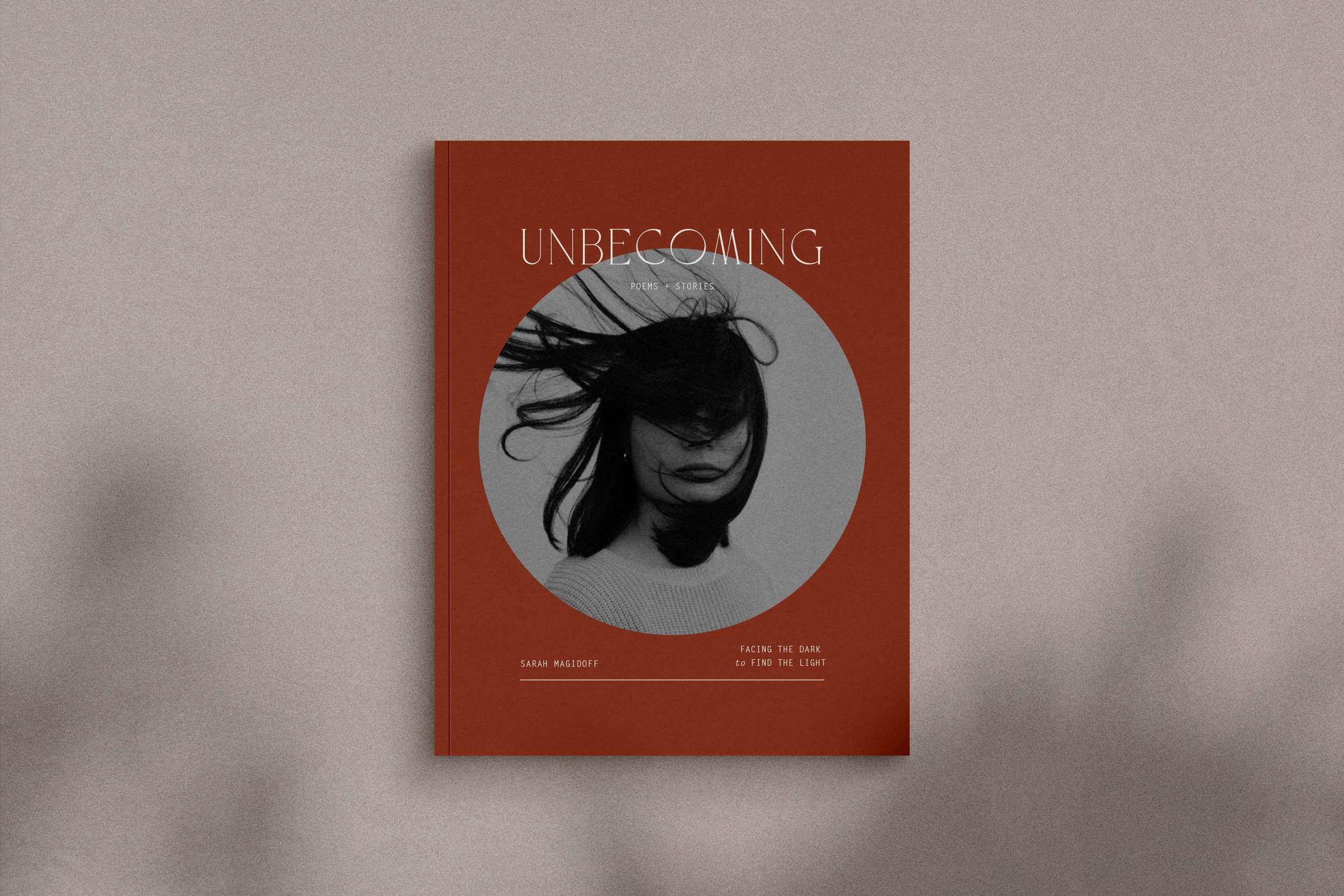
Unbecoming: Facing the Dark to Find the Light